ServicesRoof Replacement
Roof Replacement in Hawaiian Gardens
When patches stop holding and leaks keep coming back, a new roof is often the better money. We look at the whole roof, show you what we found and give you a written estimate. Then we replace it carefully, as if your home were next to ours.
Knowing When a New Roof Is the Right Call
We don't open with a new roof. If yours still has good years in it and the trouble is one cracked vent boot or a handful of lifted shingles, a roof repair will do, and you'll hear that from us. Replacing makes sense once the roofing material is spent: shingles worn bare of granules, dried and cracked underlayment beneath tile, or leaks turning up in more than one spot.
Plenty of houses in this area have stood for decades, and some carry a second shingle layer or patched sections laid over the spaced boards of an original shake roof. A replacement gives us the chance to strip all of that, fix the wood below and start clean.
We hold a California roofing license, CSLB 1092407 (C-39), and we're insured. The guidance you get comes from roofers who have torn off many roofs and know what tends to be hiding beneath them.
What Your Roof Replacement Includes
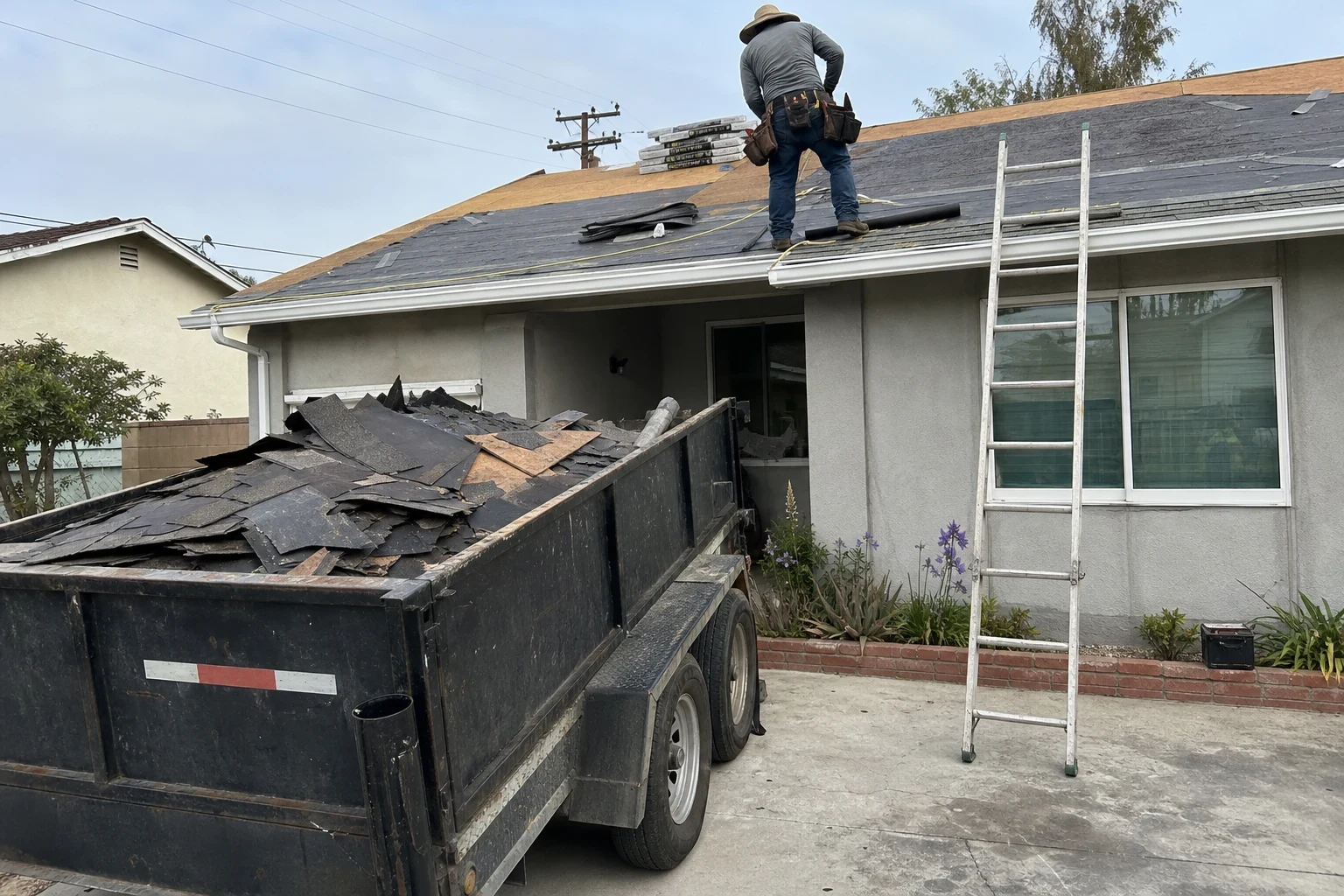
Old roof stripped to the wood
Every layer comes off, down to the bare sheathing. Seeing the wood is the only way to find rot before a new roof covers it up again.
Deck repair and re-sheathing
Soft or delaminated plywood gets replaced. If your home still has spaced boards from an old shake roof, we cover them with solid sheathing so the new roof has a proper base.
New underlayment and flashing
Fresh underlayment goes down across the whole roof, with new drip edge and flashing at walls, chimneys and valleys. Old flashing is where many leaks start, so we don't reuse it.
Vents and attic airflow
We check intake and exhaust venting and correct it where needed. A hot, stuffy attic shortens the life of any roof under Southern California sun.
Permit and inspection
We pull the city permit and schedule the inspections, so the work is on record and done to code.
Daily cleanup
Tarps go over your plants and siding during tear-off. Before we head out each evening, a rolling magnet goes across the lawn, driveway and walkways so stray nails don't end up in a tire or a bare foot.
Clues It May Be Time for a New Roof
- Leaks in several spots
- A single leak is usually a repair. Several, mainly after winter rains, often mean the underlayment has failed across the roof.
- Shingles bare or curling
- Granules rinsing into the gutters and shingle edges turning up show the roof has worn out in the sun.
- Underlayment gone brittle under tile
- Tile can outlive the paper underneath. Once that underlayment cracks, water gets in even if the tiles look fine.
- A deck that sags or feels soft
- Dips visible from the street or spongy spots underfoot mean wet, weakened wood that needs replacing.
- Repair bills that keep coming
- If you're paying for a fix every season, a new roof can cost less in the long run. We'll go over both choices honestly.
Your Roof Replacement, One Step at a Time
- 1
Free inspection
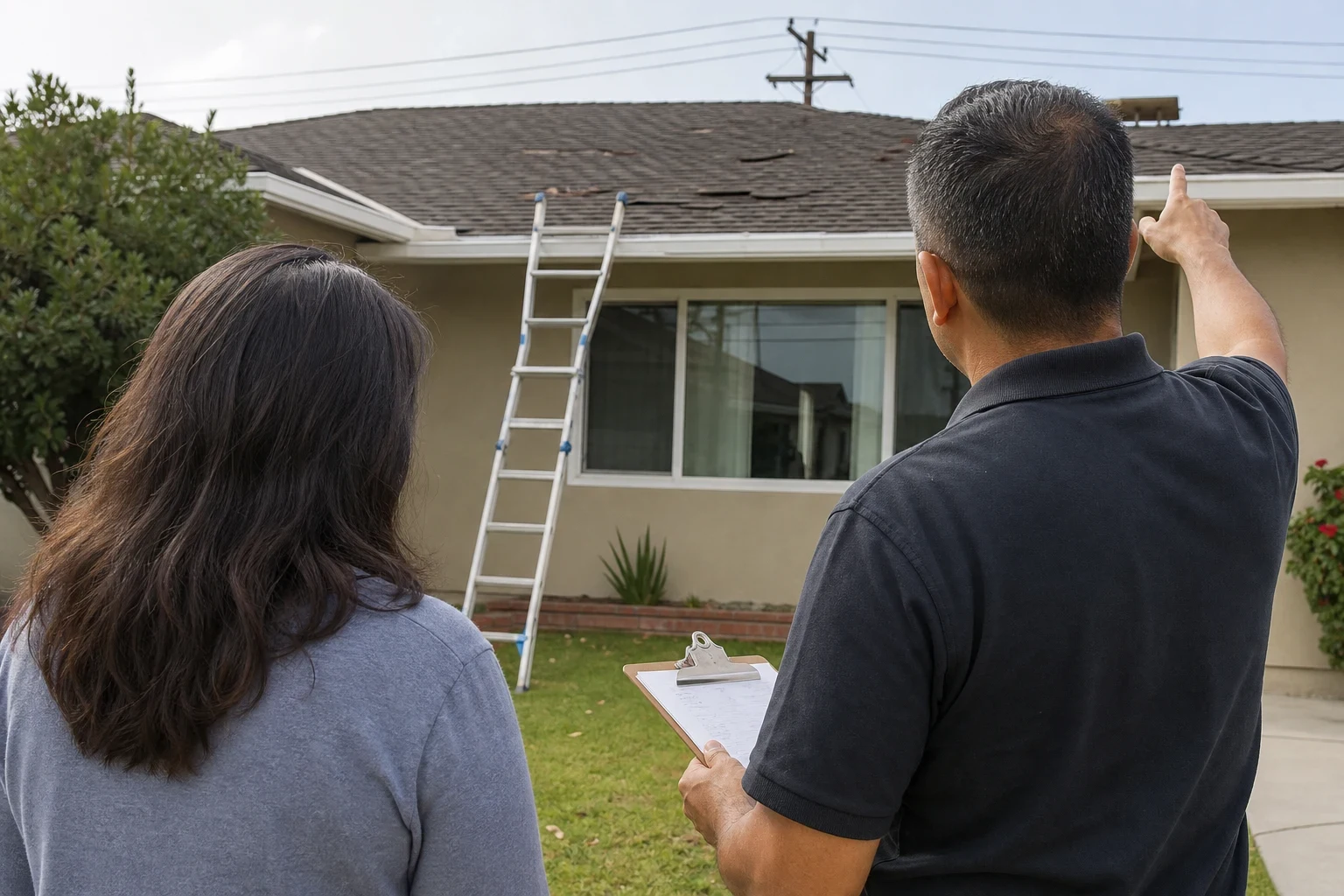
We look closely at the shingles or tile, the flashing and the underside of the deck from your attic. You get photos to see for yourself and an explanation in plain words.
- 2
Written estimate
Your free written estimate covers materials, deck work and permit items, so the cost is clear before any work begins.
- 3
Getting the site ready
Ahead of tear-off we cover landscaping, move anything in the way and park the dump trailer where it bothers you least. We'll tell you when the noisy part starts.
- 4
Tear-off and new roof
Most homes are stripped, re-decked and roofed within a few days. At the end of each day we keep the roof covered so a surprise shower stays outside.
- 5
Last walk-through
Once the city inspection passes, we walk the roof and yard with you, answer your questions and make sure the cleanup meets your standard as well as ours.
What Drives the Cost of a Replacement
No two roofs are priced alike, so we inspect before we quote and put the number in writing. Below are the main drivers. When a storm caused the damage, we work directly with your insurance adjuster.
- Roof area and pitch
- More square footage means more material and more hours. Steep slopes also take longer, since the crew needs safety anchors and sure footing on every row.
- What goes on top
- Shingle, tile and flat roof systems each carry their own material and labor cost. California's energy code can call for a cool-rated product, depending on the slope and the scope of work.
- Layers coming off
- Stripping two or three old roofs takes more time and more dump fees than stripping a single one.
- Condition of the wood
- We can't fully judge the sheathing until the old roofing is gone. Your estimate spells out how any replacement boards are priced, so there's no guesswork.
Common Questions on New Roofs
- How long does a roof replacement take?
- For most single-family homes, two to four working days once materials are on site. Tile, steep slopes or a lot of deck repair can add time. We give you an honest schedule before work starts.
- Can new shingles go right over my current roof?
- Sometimes code allows it, but we rarely recommend it. A second layer hides deck rot and adds weight. Tearing off costs more up front and gives you a roof you can count on.
- Will my insurance pay for a new roof?
- It comes down to your policy and what caused the damage. Wear and age usually aren't covered; storm damage may be. We work directly with your insurance adjuster, documenting the damage and meeting them on site, but the coverage decision is theirs.
- Do I have to stay home during the job?
- No. We just need side yard access and an outside outlet for our tools. Lots of homeowners head to work and check in later, and we'll phone you if anything comes up.

Let Us Check Your Roof
We'll inspect your roof, share photos and tell you whether it needs replacing or simply a good repair. We serve Hawaiian Gardens and nearby towns like Cerritos, Lakewood and Artesia.