ServicesFlat Roofing
Flat Roofing in Hawaiian Gardens
A flat roof only works when water leaves it. We find out why yours is ponding, blistering or leaking, then explain whether a repair, a new top layer or a full replacement makes sense for your home. You get a clear plan before anyone starts work.
A low-slope roof needs its own kind of care
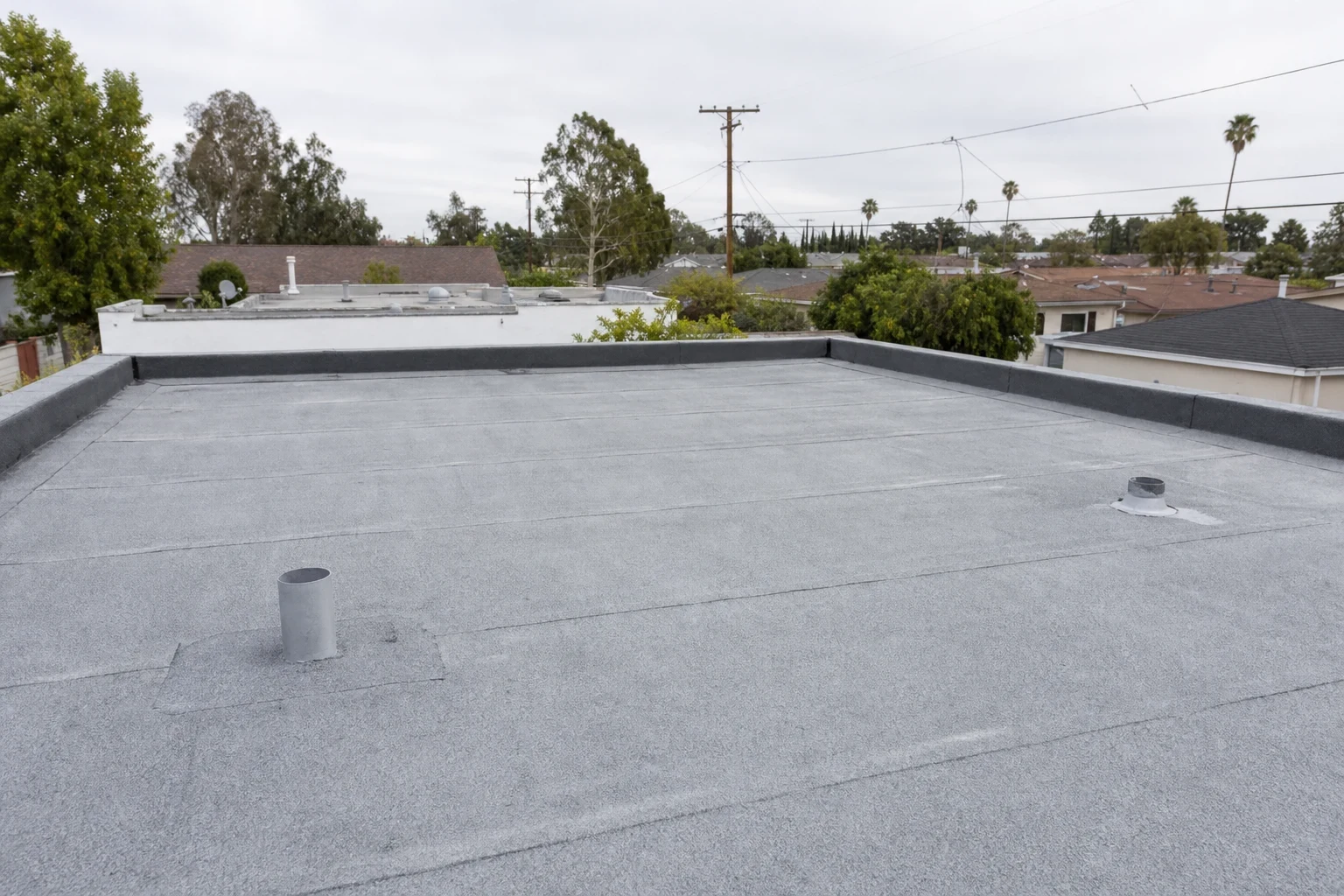
You see flat roofs everywhere on older Southern California homes: over the whole house on many mid-century places, on the back-room addition, the garage and the patio cover. None of them are truly flat. A sound one has just enough fall to send water to a drain or scupper. Once that fall sags or the membrane cracks, water stays put, and standing water works into every weak seam.
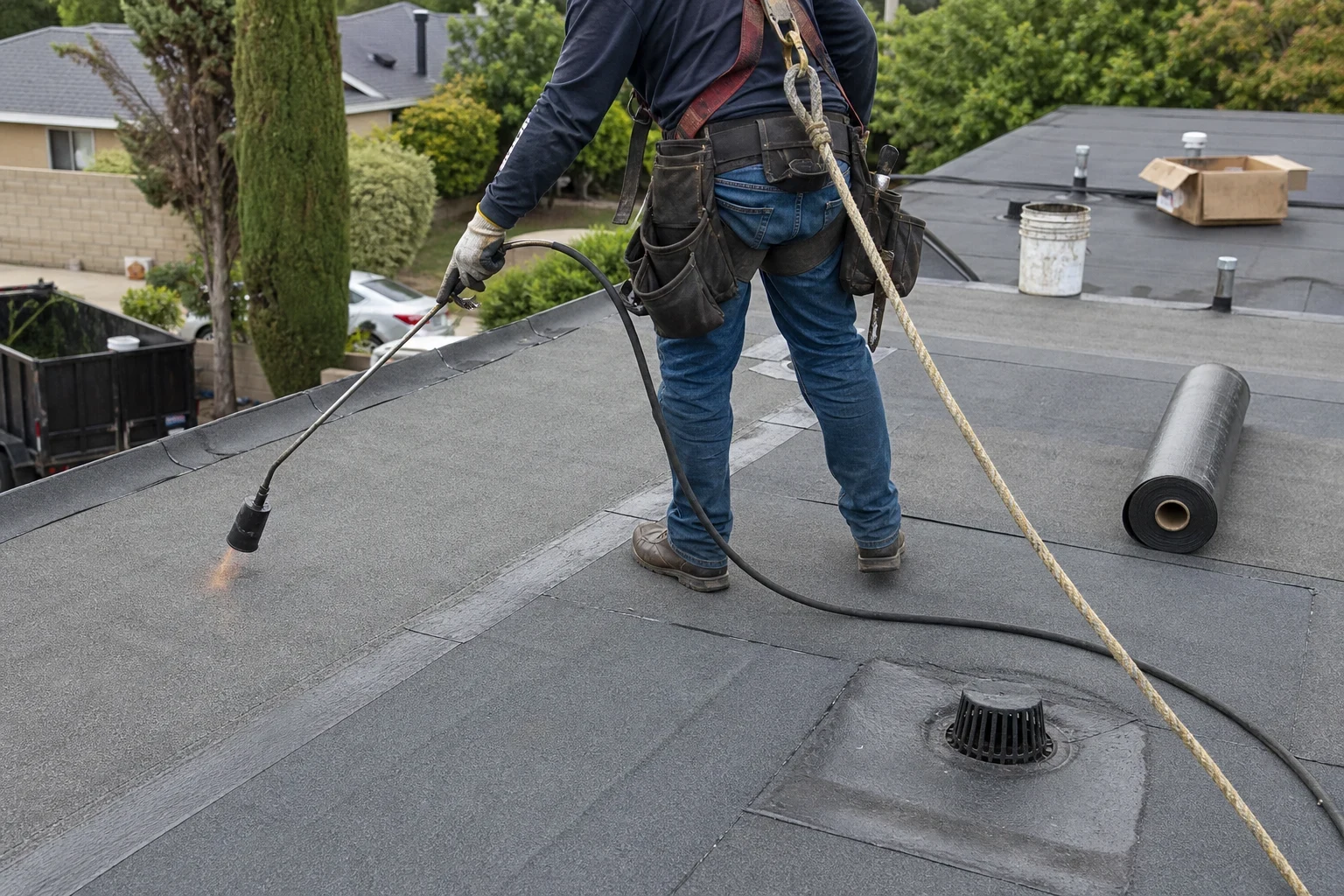
We fix and replace the usual systems: torch-down modified bitumen, gravel-topped built-up roofs and single-ply membranes such as TPO. A good share of our work is on low-slope roofs, where the work at drains, walls and edges decides whether the house stays dry.
If part of your house is pitched, we can check that section during the same visit. Our Asphalt Shingle Roofing and Tile Roofing pages cover those roofs.
What our flat roof work covers
Seam and blister repair
We cut out blistered or split sections, dry the area and patch with matching material, heat-welded or torched so the repair bonds to the existing roof instead of sitting on top of it.
Drains and scuppers
Clogged or rusted drains are behind many flat roof leaks. We clear them, reseal the flashing around them and replace failed scuppers or downspout connections.
Fixing ponding
Where water sits for days after rain, we look at the cause. Sometimes it's a blocked outlet. Sometimes the deck has sagged and needs tapered insulation or new framing support to restore the slope.
Wall and edge flashing
The joint where a flat roof meets a stucco wall or a taller roof section is a frequent leak point. We rebuild that flashing and the metal edge so water runs off, not in.
Full replacement
When the membrane is worn through, we tear off to the deck, replace any soft or rotted sheathing, and install a new system matched to how your roof drains and how you use it.
When a flat roof is asking for help
Puddles that stay two days after a storm
Standing water wears down the membrane and puts extra weight on the deck. It is one of the plainest signals that the drainage or slope is no longer working.
Soft spots or bubbles when you walk on it
A blister is air or moisture caught between layers. Summer heat splits them open, and then rain goes right through.
Cracks or an alligator-skin surface
Year after year of hard sun dries roofing out. When the top looks like cracked, dry mud, it is losing its ability to keep water out.
Ceiling stains underneath
Brown marks below an addition or patio cover often lead back to a flat section, even when the spot is a few feet from where water actually gets in.
Gravel worn away in patches
On a built-up roof, the gravel protects the layers below from UV. Where it's gone, the roof ages quickly.
Layer after layer of patches
After several rounds of coating and patching, a roof may have little left for new material to grip. That is usually when we have an honest talk about replacing it.
How a flat roof job goes
- 1
Free inspection on your roof
We walk the roof, check drains and flashing, probe for soft decking and look at the ceilings inside. You get photos of what we found and a plain explanation of what it means.
- 2
Written estimate with options
Our free written estimate lists each item. Where a repair will hold, we say so. Where it won't, we show you why and price the replacement side by side.
- 3
Prep and protection
Before work starts, we pull any required permit, cover planters and walkways near the drop zone, and let you know when the crew will arrive and how long the job should take.
- 4
The work and the cleanup
Most flat roof repairs wrap up in a day, while replacements typically take a few days depending on size. We haul away old material, sweep for nails and water-test the drains before we call it done.
What sets the price of flat roof work
We price a flat roof from what we find on it, so you get the estimate after the inspection, not before. Fixing one seam and tearing off the whole roof are very different jobs.
- How big, and how many sections
- A lone garage roof runs less than a main roof with an addition and patio cover, since each one has its own edges and drains.
- The deck underneath
- Rotted or wet sheathing must be replaced before the new roof goes down. Often we can't see it until the old layers come off, so the estimate explains how we'll handle it.
- How many old layers come off
- Some older flat roofs have two or three layers piled on each other. Each added layer means more labor and more to haul away.
- Which material you choose
- Torch-down, built-up and TPO vary in price, in how long they last and in how they stand up to heat and foot traffic. We'll explain which suits your roof.
- Fixing how water drains
- Tapered insulation, new drains or new scuppers to stop ponding raise the price, but they are often what lets the new roof last.
Common questions about flat roofs
Something not covered here? (562) 614-1250
Is a repair enough for my flat roof, or is it time for a new one?
A lot of the time a repair does the job, particularly when the trouble is one seam, one drain or a single flashing spot. When cracks run across the whole membrane or the deck feels soft in several areas, a patch only holds for a few months. We'll share photos and explain which case your roof falls into.
Should I put a coating on my roof?
Coating can add years to a membrane that is still solid and firmly attached. It does nothing for ponding, soaked insulation or seams that have opened below it. We suggest one only when the roof underneath is healthy enough to gain from it.
Does flat roof work require a permit?
A replacement usually needs a permit and a city inspection, while small repairs typically don't. When one is needed, we pull it and set up the inspection ourselves, so you don't have to deal with the city.
Do you hold a license and insurance for flat roofs?
We do. We are a licensed roofing contractor, CSLB 1092407 (C-39), and we are insured. Feel free to check the license number with the state before any work begins.
What if my insurance company is part of this?
We work directly with your insurance adjuster: we give them our photos and findings and answer their questions about the roof. Coverage is the adjuster's call, but you won't have to explain roofing terms by yourself.
Let's get your flat roof draining again
We'll come by, look over the drains, seams and deck, and give you an honest answer along with a free written estimate. One call sets up a visit for homes in Hawaiian Gardens and nearby towns like Lakewood, Cerritos and Artesia.